The Southeastern five-lined skink also called the blue-tailed lizard is a black lizard with yellow stripes commonly found in the Southeastern United States including Georgia Florida Alabama South Carolina North Carolina and Virginia. Fossil History of the Blue Tailed Skink.
Bluetail Mole Skink Climate Adaptation Explorer
This may be part of a defense strategy called defective coloration.

Blue tailed skink florida. Threats Habitat loss is the main threat to the bluetail mole skink US. The sand skink has vestigial legs and spends the majority of its time below the surfac對e swimming in loose sand. This dataset contains suitable habitat for the Florida Sand Skink Neoseps reynoldsi and Blue-Tailed Mole Skink Eumeces egregius lividus.
Tanimbar blue tongue skink CB. Fish and Wildlife Service Wildlands is conducting research to update the current status of Federally-threatened Florida sand skinks and blue-tailed mole skinks on conservation lands of the Lake Wales Ridge Winter Haven Ridge and Mt. Juveniles have five stripes and blue tails but adult males.
They grow up to five inches 13cm in total length and are tan or gray in color with small legs. Although many skinks are similar in appearance possessing small bodies relatively short legs and thick necks their behaviors and. They are common in the wild in some parts of the country and also make good pets because they are easy to care for and eat food that is easy to acquire.
Around half of this length is made up of the tail which is very long and tapered. Much of the bluetail mole skinks habitat has been destroyed or degraded due to residential commercial and agricultural development. Skink distribution is defined by three factors.
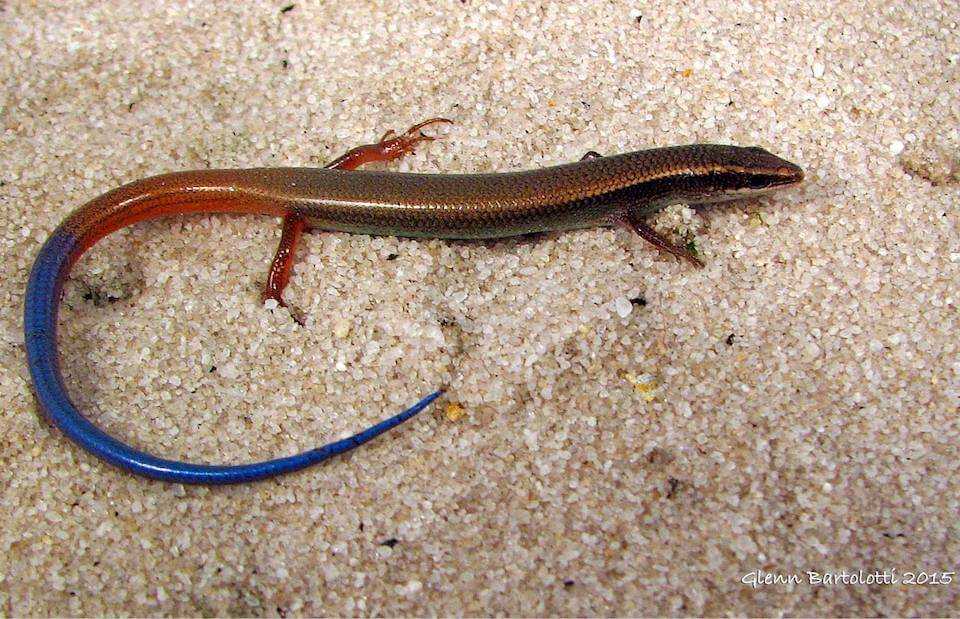
Juvenile blue-tailed mole skinks have brown bodies with neon blue tails hence their name that turn pink as they mature. Primary populations of sand. Both species are most commonly associated with habitat dominated by xeric vegetation such as oak-dominated scrub turkey oak barrens high pine and xeric hammocks.
They hide under leaf litter rocks and in sand pits to stay cool in the dry Florida brush lands. The Broad-headed Skink Eumeces laticeps is found throughout the panhandle and down the peninsular to mid-central Florida. It requires open sandy patches interspersed with sclerophyllous vegetation.
Decided to take some pictures during his recuperation then released. The blue color is supposed to serve as a warning to predators that the skink is poisonous and there is some actual evidence that the blue tails are poisonous if eaten. Hes less than 2.
The American Five Lined Skink goes through a dramatic change as the species matures. Panaspis megalurus the blue-tailed snake-eyed skink of Tanzania. The tail takes up about half of this lizards body while their heads take on a wedge shape with small eyes which allows the skink to move seamlessly through the sand.
It is sometimes called a five-lined skink due to the yellowish stripes on its sides and back that lead into a bright blue tail. The blue-tailed skink lizard commonly known as the five-lined skink is a species of lizards native to North America. Blue Tailed Skink Description.
In Florida bluetail mole skinks are found in Highlands Polk and Osceola counties along the Lake Wales Ridge Florida Natural Areas Inventory 2001. Trachylepis quinquetaeniata the five-lined mabuya of Africa. Southeastern Five-Lined Skink Eumeces inexpectatus Instant ID A lizard with a thick neck and sprawling legs Juveniles have five stripes on a black background color changes from yellow at the head to blue at the tail Adults have a red-brown head with color becoming drabber towards the tail faint lines sometimes visible.
With funding from the US. Many skinks have blue tails. As a clever trick mole skinks sometimes break off their colorful tails to distract potential predators.
The Blue-tailed skink discards its own bright blue tail during an attack to distract the predator and allow the skink to escape. Fish Wildlife Service 1999. This layer was created by University of Florida - GeoPlan Center using criteria set forth in the Peninsular Florida Species Conservation and Consultation Guide for Skinks.
They are characterized by their bright blue tails and the vertical yellow stripes on their body. Both sand skinks and blue-tailed mole skinks are endemic to which means they occur only on the sandy ridges of central Florida. The Blue Tailed Skink is a relatively small species of lizard that typically grows to around 5-8 inches in length.
The blue tailed skink known taxonomically as Cryptoblepharus egeriaeThe Cryptoblepharus family is one of several families of skinks and skink-like reptiles and currently comprises 53 species. It is the largest of the states skinks reaching 13 in length. The bluetail mole skink is a small slender lizard that occupies xeric upland habitats of the Central Ridge in peninsular Florida.
County elevation and soil types. Sand skinks Neoseps reynoldsi and bluetail mole skinks Eumeces egregius lividus are found in interior peninsular Florida. Blue-tailed mole skink Eumeces egregius lividus The sand skink and blue-tailed mole skink are small fossorial lizards that occur on the sandy ridges of interior central Flor൩da and are adapted to life in the sand.
Trachylepis quinquetaeniata the blue-tailed skink of Africa present in Florida as an invasive non-native species Topics referred to by the same term. A blue-tailed skink is a black and yellow-striped lizard. The Florida sand skink Plestiodon reynoldsi has adapted itself to live underground.
Rescued this baby skink from pool.