The Blue-tailed skink discards its own bright blue tail during an attack to distract the predator and allow the skink to escape. Some blue tailed skunks can consume fruits and vegetables.

3 Ways To Catch A Blue Tailed Skink Wikihow
The age of first breeding of the blue-tailed skink is approximately one year.
Blue tailed skink diet. This can help supplement your skinks. Blue-Tongued Skink Diet and Feeding. Egeriae is most closely related to the metallicus group of Cryptoblepharus native to Australia with the estimated divergence of C.
What do blue tongue skinks eat. The blue-tailed skink is a type of lizard native to Australia. Some blue-tailed skinks have a diet that consists of up to 70 percent of green leafy vegetables and fruits.
All insects must be bought for reptile consumption and gut-loaded for 24 hours apart from Phoenix worms before feeding to your skink. How often do blue tongue skinks need to eat. Blue-tailed skinks is an insectivorous lizard species.
While other skinks have blue tails the term blue-tailed skink usually refers to a juvenile form of the five-lined skink which is an insectivore and eats spiders roaches crickets grasshoppers beetle larvae caterpillars earthworms snails slugs millipedes crickets termites flies ants and beetles. A blue-tailed skink is a black and yellow-striped lizard. The Christmas Island blue-tailed skinks eats small insects and worms.
Their diet contains up to 70 of fruits and green leafy vegetables. It also eats slightly larger vertebrae prey including smaller lizards baby. They also need under-tank heating to aid digestion and help maintain the tanks ambient temperature.
What Do Blue-tailed Skinks Eat. The blue-tailed skink lizard commonly known as the five-lined skink is a species of lizards native to North America. Blue tailed skunks eat red-tipped lettuce figs apple slices berries grapes kale collard greens and many others.
They will also eat frogs and even smaller lizards when the opportunity arises. Veggies and fruits Some blue-tailed skinks have a diet that consists of up to 70 percent of green leafy vegetables and fruits. Supplement your skinks diet with fruits and vegetables.
The majority of a Five Lined Skink diet will come from arthropods and insects such as spiders crickets ants beetles and other insects. Citation needed Evolutionary relationships. The Blue Tailed Skink is even known to eat the occasional Pinkie Mouse.
Crickets Frozen or thawed crickets are excellent options for your Blue Tailed Skink but ensure that your Skink is large enough before feeding them a. They mainly thrive upon all types of available small bugs and different types of worms like earthworms and other invertebrates. Blue tongue skinks are omnivores and in the wild they eat plants vegetables fruits berries blossoms dead animals bugs.
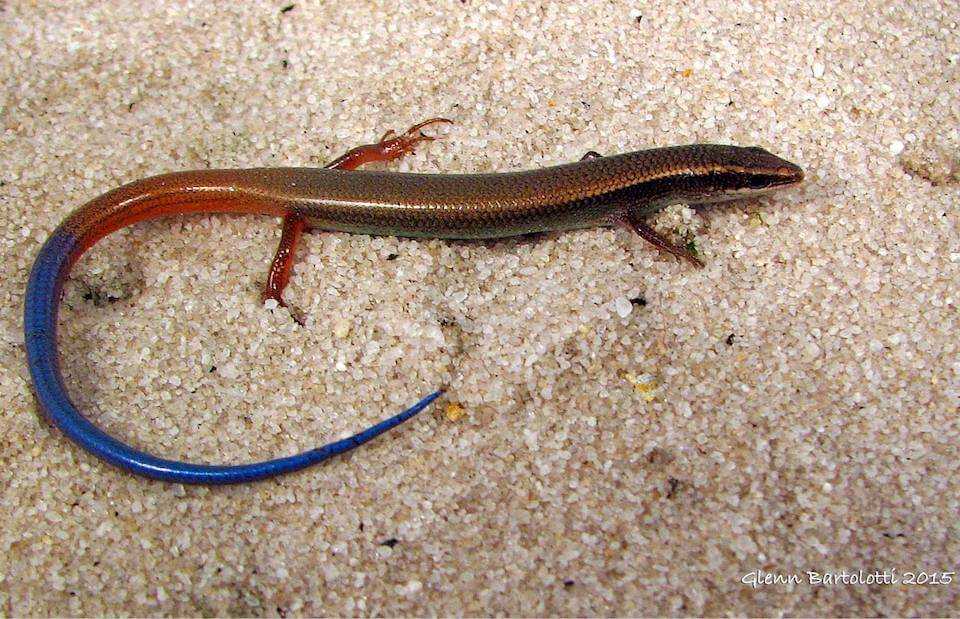
Skinks are active during the day and are able to tolerate a wide range of temperatures. They are cylindrical highly flexible lizards that have. As its name suggests this small reptile features a striking blue tail at the end of a dark brown or black body.
Blue-tailed skinks are generally insectivores and tend to feed on a diet of locusts crickets roaches snails slugs and worms. They are common in the wild in some parts of the country and also make good pets because they are easy to care for and eat food that is easy to acquire. These lizards also prey on earthworms and other types of invertebrates.
It is sometimes called a five-lined skink due to the yellowish stripes on its sides and back that lead into a bright blue tail. When your Blue Tailed Skink is an adolescent feed them a diet of about 70 small insects a majority of which can be silkworms. This species is ubiquitous and Blue Tongue skink should provide a mixture of protein vegetables and fruits.
Yes blue tongue skinks can eat insects. While they prefer insects they can survive and thrive on a mostly vegetarian diet. Blue-tailed skinks are smaller lizard species.
While they prefer insects they can survive and thrive on a mostly vegetarian diet. Egeriae from the group taking place around 7 million years ago See also. Blue Tailed Skink Diet.
They can also eat slightly larger vertebrae prey such as baby mice smaller lizards and frogs. Reproduction and Life Cycle. They are characterized by their bright blue tails and the vertical yellow stripes on their body.
Do blue-tailed skinks eat vegetables and fruits. They measure between 16 and 31 inches on average. Pacific Blue Tailed Skink Diet The Pacific Blue Tail Skink eats primarily small insects in the wild but occasionally will eat ripe fruit as well so is known as omnivorous although live insects will make up the majority of the diet.
Unlike most reptiles the prehensile-tailed skink Corucia zebra needs more than one heat source. This species is known as the hardest lizard that thrives on just about any diet and a balanced diet results in a more active healthier blue-eccentric skink. As pets blue tongue skinks can enjoy a big variety of foods such as live bugs meat veggies greens dog or cat food fruits and plants.
Their scientific name is Cryptoblepharus egeriae. If you plan on feeding your skink fruits and veggies these types are your best bet. A high-quality heating pad is.
They are among the smallest skinks on the globe. It hence prey on a variety of worms and small bugs. Insects such as hornworms Phoenix worms crickets silkworms and others should be the main source of protein for blue tongue skinks.
Position the heat lamp around 8-10 inches from the surface of the basking area. Monkey-tailed skinks like to bask so they need a heat lamp. In addition to eating insects skinks enjoy a variety of fruits and vegetables.
The Southeastern five-lined skink also called the blue-tailed lizard is a black lizard with yellow stripes commonly found in the Southeastern United States including Georgia Florida Alabama South Carolina North Carolina and Virginia. Fossil History of the Blue Tailed Skink.
Bluetail Mole Skink Climate Adaptation Explorer
This may be part of a defense strategy called defective coloration.

Blue tailed skink florida. Threats Habitat loss is the main threat to the bluetail mole skink US. The sand skink has vestigial legs and spends the majority of its time below the surfac對e swimming in loose sand. This dataset contains suitable habitat for the Florida Sand Skink Neoseps reynoldsi and Blue-Tailed Mole Skink Eumeces egregius lividus.
Tanimbar blue tongue skink CB. Fish and Wildlife Service Wildlands is conducting research to update the current status of Federally-threatened Florida sand skinks and blue-tailed mole skinks on conservation lands of the Lake Wales Ridge Winter Haven Ridge and Mt. Juveniles have five stripes and blue tails but adult males.
They grow up to five inches 13cm in total length and are tan or gray in color with small legs. Although many skinks are similar in appearance possessing small bodies relatively short legs and thick necks their behaviors and. They are common in the wild in some parts of the country and also make good pets because they are easy to care for and eat food that is easy to acquire.
Around half of this length is made up of the tail which is very long and tapered. Much of the bluetail mole skinks habitat has been destroyed or degraded due to residential commercial and agricultural development. Skink distribution is defined by three factors.
Juvenile blue-tailed mole skinks have brown bodies with neon blue tails hence their name that turn pink as they mature. Primary populations of sand. Both species are most commonly associated with habitat dominated by xeric vegetation such as oak-dominated scrub turkey oak barrens high pine and xeric hammocks.
They hide under leaf litter rocks and in sand pits to stay cool in the dry Florida brush lands. The Broad-headed Skink Eumeces laticeps is found throughout the panhandle and down the peninsular to mid-central Florida. It requires open sandy patches interspersed with sclerophyllous vegetation.
Decided to take some pictures during his recuperation then released. The blue color is supposed to serve as a warning to predators that the skink is poisonous and there is some actual evidence that the blue tails are poisonous if eaten. Hes less than 2.
The American Five Lined Skink goes through a dramatic change as the species matures. Panaspis megalurus the blue-tailed snake-eyed skink of Tanzania. The tail takes up about half of this lizards body while their heads take on a wedge shape with small eyes which allows the skink to move seamlessly through the sand.
It is sometimes called a five-lined skink due to the yellowish stripes on its sides and back that lead into a bright blue tail. The blue-tailed skink lizard commonly known as the five-lined skink is a species of lizards native to North America. Blue Tailed Skink Description.
In Florida bluetail mole skinks are found in Highlands Polk and Osceola counties along the Lake Wales Ridge Florida Natural Areas Inventory 2001. Trachylepis quinquetaeniata the five-lined mabuya of Africa. Southeastern Five-Lined Skink Eumeces inexpectatus Instant ID A lizard with a thick neck and sprawling legs Juveniles have five stripes on a black background color changes from yellow at the head to blue at the tail Adults have a red-brown head with color becoming drabber towards the tail faint lines sometimes visible.
With funding from the US. Many skinks have blue tails. As a clever trick mole skinks sometimes break off their colorful tails to distract potential predators.
The Blue-tailed skink discards its own bright blue tail during an attack to distract the predator and allow the skink to escape. Fish Wildlife Service 1999. This layer was created by University of Florida - GeoPlan Center using criteria set forth in the Peninsular Florida Species Conservation and Consultation Guide for Skinks.
They are characterized by their bright blue tails and the vertical yellow stripes on their body. Both sand skinks and blue-tailed mole skinks are endemic to which means they occur only on the sandy ridges of central Florida. The Blue Tailed Skink is a relatively small species of lizard that typically grows to around 5-8 inches in length.
The blue tailed skink known taxonomically as Cryptoblepharus egeriaeThe Cryptoblepharus family is one of several families of skinks and skink-like reptiles and currently comprises 53 species. It is the largest of the states skinks reaching 13 in length. The bluetail mole skink is a small slender lizard that occupies xeric upland habitats of the Central Ridge in peninsular Florida.
County elevation and soil types. Sand skinks Neoseps reynoldsi and bluetail mole skinks Eumeces egregius lividus are found in interior peninsular Florida. Blue-tailed mole skink Eumeces egregius lividus The sand skink and blue-tailed mole skink are small fossorial lizards that occur on the sandy ridges of interior central Flor൩da and are adapted to life in the sand.
Trachylepis quinquetaeniata the blue-tailed skink of Africa present in Florida as an invasive non-native species Topics referred to by the same term. A blue-tailed skink is a black and yellow-striped lizard. The Florida sand skink Plestiodon reynoldsi has adapted itself to live underground.
Rescued this baby skink from pool.
Blue-tailed skinks like most lizards are attracted to light. Western skink can be identified by the tan cream and brown stripes that run their entire.

Columbia River Basin Biodiversity Atlas
The Southeastern five-lined skink also called the blue-tailed lizard is a black lizard with yellow stripes commonly found in the Southeastern United States including Georgia Florida Alabama South Carolina North Carolina and Virginia.

Blue tailed skinks lizards. The Blue Tailed Skink is a relatively small species of lizard that typically grows to around 5-8 inches in length. Cryptoblepharus egeriae a lizard native to Australias Christmas Island. How do you attract blue tailed skinks.
A blue-tailed skink is a black and yellow-striped lizard. Pet Ponder says a blue-tailed skink makes. Do blue tailed lizards eat fruit.
Veggies and fruits Some blue-tailed skinks have a diet that consists of up to 70 percent of green leafy vegetables and fruits. The blue tail of juveniles is an antipredator adaptation that serves to attract the predator away from the vulnerable part of the lizard its body. The blue-tailed skink is a smooth and slender species of lizards that can grow up to a maximum length of about 20 cm.
They are common in the wild in some parts of the country and also make good pets because they are easy to care for and eat food that is easy to acquire. It is sometimes called a five-lined skink due to the yellowish stripes on its sides and back that lead into a bright blue tail. Blue Tailed Skinks are impressive lizards that love to chow down on a wide array of foods.
Around half of this length is made up of the tail which is very long and tapered. As for North American lizards that are small enough to snack on juvenile blue-tailed skinks newts and salamanders all secrete poison through their skin says The Nest and Cuteness. Blue-tailed skink may refer to.
While they prefer insects they can survive and thrive on a mostly vegetarian diet. Description edit The American five-lined skink is small to medium-sized growing to about 125 to 215 centimetres 49 to 85 in total length including tail. The blue-tailed skink proper is Cryptoblepharus egeriae from Christmas Island but in North America the juveniles of any Eumeces or Plestiodon species may be called this.
Blue Tailed Lizards are small reptiles that are easier to be caught by you cats and dogs. These internal parasites have. Blue-tailed skink Plestiodon skiltonianus more commonly called western skink are elusive lizards that prefer to hide in their burrows in crevices under rocks or under leaf debris while not foraging.
Juveniles escape potential predators by disappearing into the leaf litter lashing their tails back and forth above the leaves. Skinks are active during the day and are able to tolerate a wide range of temperatures. Plestiodon elegans the five-striped blue-tailed skink a lizard found in East-Asia.
Are blue tailed lizards poisonous to dogs. Can I keep a blue-tailed lizard. Blue Tailed Skink Description.
I felt extremely lucky to see one last summer. That being said the bite can be painful. Blue-tailed skinks like most lizards are attracted to light.
The blue-tailed skink bite presents no threat to humans as the animal is not venomous and there is no record of a skink causing lasting injury to an adult or child according to the Savannah River Ecology Laboratory. That being said the bite can be painful. Trachylepis margaritifera the rainbow mabuya of Africa.
They can also eat slightly larger vertebrae prey such as baby mice smaller lizards and frogs. Their scientific name is Cryptoblepharus egeriae. This species is notably absent from many coastal areas and barrier islands.
The blue-tailed skink bite presents no threat to humans as the animal is not venomous and there is no record of a skink causing lasting injury to an adult or child according to the Savannah River Ecology Laboratory. Toxic Lizards However since these lizards have enough venom to kill a dog or cat keep your pet from trying to play or fight with them. The American Five Lined Skink goes through a dramatic change as the species matures.
Blue Tailed Lizards carry liver fluke in them. The blue-tailed young of five-lined southeastern five-lined and broadhead skinks are widely referred to as scorpions and are believed to have a venomous sting. Though most species of lizards are not poisonous Blue Tailed Lizards may not be 100 safe for your pets.
As its name suggests this small reptile features a striking blue tail at the end of a dark brown or black body. Blue-tailed skinks like most lizards are attracted to light. Set up a light such as a lamp or a flashlight and some bait either crickets or mealworms near the area where you think the skink is located to help lure it out.
Are Blue Tailed Lizards Dangerous. The blue-tailed skink is a type of lizard native to Australia. Blue-tailed skinks are generally insectivores and tend to feed on a diet of locusts crickets roaches snails slugs and worms.
Can you keep a blue tailed lizard as a pet. If you have one of these beautiful lizards at home what should you be feeding them and how does that compare to what they eat in the wild. Five-lined skinks are common in most areas of Georgia and South Carolina but are most abundant in the Piedmont.
Is A Blue Tailed Lizard Poisonous. Plestiodon fasciatus the five-lined skink of North America. Furthermore why should you feed a captive Blue Tailed Skink anything different from what a wild one eats.
Set up a light such as a lamp or a flashlight and some bait either crickets or mealworms near the area where you think the skink is located to help lure it out. They have a brown-black coloring with yellow stripes vertically across their body spanning from their snout all the way till the end of the tail.
Can you keep a blue tailed lizard as a pet. Are skinks with blue tails poisonous.

3 Ways To Catch A Blue Tailed Skink Wikihow
Most skinks do not even have blue tails and like the vast majority of lizard species the tail just acts as a decoy to predators.
Are blue tailed skinks poisonous. I grew up in an area where the Mountain Skink one of the blue-tailed species in the American southwest lived in the wild and I do remember people telling me they were deadly poisonous. The most recent research indicates that juvenile lizards that still have their blue tails may be poisonous to cats while older lizards with gray tails are not. They only scare away predators who want to get close by opening their mouths and hissing suggesting they can also act aggressively.
As for North American lizards that are small enough to snack on juvenile blue-tailed skinks newts and salamanders all secrete poison through their skin says The Nest and Cuteness. The worst thing that may happen is they occasionally bite but there are simple guidelines you can follow to prevent this from ever happening. The blue-tailed skink bite presents no threat to humans as the animal is not venomous and there is no record of a skink causing lasting injury to an adult or child according to the Savannah River Ecology Laboratory.
They can bite but dont possess any venom so they wont poison your kitty. Do blue tailed skinks play dead. Bluetongue skink is not poisonous.
That being said the. Though not an issue for humans American five-lined Skinks are toxic to pets and other animals. The blue-tailed skink bite presents no threat to humans as the animal is not venomous and there is no record of a skink causing lasting injury to an adult or child according to the Savannah River Ecology Laboratory.
When ingested these lizards can case Peripheral Vestibular Disease in animals. As with many lizards when a skink is attacked its tail will break off and continues to wiggle distracting a would-be predator. The blue-tailed skink bite presents no threat to humans as the animal is not venomous and there is no record of a skink causing lasting injury to an adult or child according to the Savannah River Ecology Laboratory.
I have heard of cats becoming ill from eating blue-tailed skinks but the information among veterinarians I have talked to is contradictory and not definitive. According to Savannah River Ecology Laboratory there is no scientific record that shows a long lasting effect of a bite from a Blue Tailed Lizard on human or pet. That being said the bite can be painful.
How often should you feed a blue tailed skink. I love to watch the little brown anole lizards around our house. Toads also carry these dangerous parasites.
Image copyright J Harrison. No skink in the world is venomous so being bitten or stung by one is not a problem. When a skink is grabbed by the tail the tail simply detaches from the rest of the body and the skink escapes eventually growing a new.
Their teeth can also be used for biting but more for crushing their food than tearing the enemy apart. The good news is that Blue-tailed skinks are not poisonous or toxic to cats. Are Blue Tailed Lizards Dangerous.
They are not poisonous or toxic to humans. Some skinks may be poisonous to eat. That being said the bite can be painful.
The blue-tailed skink bite presents no threat to humans as the animal is not venomous and there is no record of a skink causing lasting injury to an adult or child according to the Savannah River Ecology Laboratory. Can blue tailed skinks bite. As with many lizards when a skink is attacked its tail will break off and continues to wiggle distracting a would-be predator.
Juveniles of the most common species have smooth black bodies with yellow stripes down the body and a bright metallic blue tail. What happens if a dog eats a skink. That being said the bite can be painful.
Some skinks may be poisonous to eat. If you treat skinks with respect and follow some simple procedures you. Pet Ponder says a blue-tailed skink makes a good pet because.
Blue Tailed Lizards are humble non- poisonous reptiles that will present no threat to your children humans or pets such as dogs and cats since their bite do not contain venom. Is a blue lizard poisonous. However Ive done a lot more research since those schoolyard stories about how even touching one wo.
Answer 1 of 9. For some reason some people are quite superstitious and rumours have led people to believe that they are dangerous poisonous or even venomous. Is a black lizard with yellow stripes and blue tail poisonous.
As for the common gecko though neither poisonous nor venomous they carry liver flukes that could seriously harm your cat. If your cat tries eating or playing with one they are capable of shedding their tail as a distraction. That being said the bite can be painful1 Dec 2018.
In fact they are really not that dangerous at all. They are beneficial and beautiful. Are blue-tailed skinks poisonous to humans.
Neither are they venomous. Are Blue Tailed Salamanders Poisonous. Although the five-lined skink is commonly rumored to be poisonous this is just a myth and is not true.
Are blue-tailed skinks good pets. Are blue-tailed skinks venomous. The blue-tailed skink bite presents no threat to humans as the animal is not venomous and there is no record of a skink causing lasting injury to an adult or child according to the Savannah River Ecology Laboratory.
All lizards can bite if you pick them up and if it happens to break the skin you should wash it. The blue-tailed skink bite presents no threat to humans as the animal is not venomous and there is no record of a skink causing lasting injury to an adult or child according to the Savannah River Ecology Laboratory. Similarly you may ask do blue tail lizards bite.
Whether or not the blue-tailed skink is poisonous remains something vets scientists and other researchers have debated for decades. They are one of the most common lizards on the east coat of the United States and young five-lined skinks do have a noticeable blue tail. If you dog eats a skink hes probably going to vomit it up.
Are Blue Tongue Skinks Poisonous. The lizard with the bright blue tail like the Tar Baby don say nuffin. Are Skinks poisonous.
The scientific and veterinary communities meanwhile remain divided on this issue. No skink in the world is venomous so being bitten or stung by one is not a problem. The Florida sand skink is larger and q.
No they are not poisonous. The bottom links is skinks are not toxic to dogs and there are no poisonous skinks anywhere in the world. A persistent popular conviction in the southeastern United States maintains that the five-lined skink or blue-tailed lizard is poisonous to cats.
But usually its just a pinch. This blue tongued skink might look poisonous to your dog but actually isnt toxic. Some skinks may be poisonous to eat.
That being said the bite can be painful.